Better indoor air quality starts with your HVAC system, not a scented spray. Your air conditioner moves and filters the air you breathe every day, so small upgrades like the right filter size or improved airflow can make a noticeable difference. Homeowners often call for AC repair when they’re uncomfortable, but the real problem may be poor filtration, restricted airflow, or indoor pollutants that keep circulating.
The good news is that you can improve indoor air quality with practical steps, and when needed, proven air treatment add-ons. Poulin Cooling helps homeowners evaluate options the right way so you can get cleaner air without wasting money on gimmicks.
Below are the most important questions and upgrades to consider, from filters and grille direction to advanced systems like iWave, Plasma Air, and APCO-X.
Start With the Basics: Air Filters That Fit and Filter
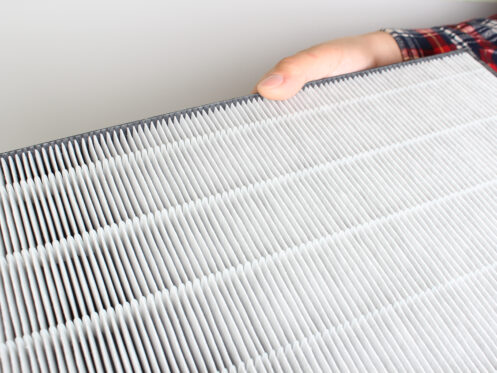
Your HVAC filter is the first line of defense for indoor air quality. But even a high-quality filter can fail if it’s the wrong size or installed incorrectly.
Filter size matters more than most people realize
Use the exact size listed on the filter rack (not “close enough”). A filter that’s too small can allow air to bypass the filter, sending dust and particles back into your home. A filter that’s too restrictive can choke airflow and create performance issues.
What type of filter should you use?
Most homes do well with a quality pleated filter in a reasonable efficiency range. Going too high on filtration can reduce airflow if your system isn’t designed for it. This is measured in MERV rating (Minimum Efficiency Reporting Value).
HVAC systems are designed to handle a range of MERV rated filters, meaning the system can get an adequate flow of air and not be working harder than it should.
The filter on an HVAC system is primarily designed to protect the system itself from dust and debris. A secondary purpose is to filter the air that is pushed back into the home. The higher the MERV rating, the more restrictive the air flow through them. Prior to 2010, most units were designed to work with MERV 8. Newer systems can sometimes run efficiently with MERV 11 to 13 filters, and some can go higher. MERV 8 will catch pollen, dust mites and pet dander. MERV 11 will catch mold spores and auto emissions – better for people with allergies. MERV 13 offers excellent filtration for smoke, smog and bacteria. For comparison, a HEPA filter would be comparable to MERV 17.
But for cleaner air, you cannot exceed the recommended MERV rating for the unit that you have. That will result in inefficient heating and cooling and reduced lifespan. For higher filtration ratings you would have to look to other solutions.
What to ask your HVAC provider:
- What filter size does my system require?
- Is my system designed to handle a higher-efficiency filter?
- How often should I replace it based on my home (pets, allergies, renovations)?
Quick tips to keep it simple:
- Replace filters on a predictable schedule (monthly or every 2–3 months, depending on conditions).
- If dust builds up quickly, it may be an airflow or duct leakage issue, not just a “bad filter”.
Air Grilles and Vents: Small Adjustments, Big Comfort Gains
Supply grilles (where air comes out) and returns (where air goes in) play a major role in how clean air circulates through your home.
Airflow direction affects how particles settle
If supply air shoots directly into a corner or is blocked by furniture, circulation suffers. Stagnant areas can feel stuffy and may hold odors and dust longer.
Simple airflow improvements:
- Keep supply vents open and unblocked
- Keep return grilles clear (no rugs, furniture, or heavy curtains)
- Use adjustable grilles to direct air into the room, not at a wall
If you have rooms that are always dusty or don’t cool evenly, it’s worth having airflow evaluated before assuming you need major AC repair.
Adding Indoor Plants
Indoor plants can improve comfort and the feel of a space, and they’re a nice addition to a home environment. Plants alone are not, however, a replacement for filtration and ventilation.
Realistic benefits of indoor plants:
- Improved room ambiance and comfort
- Contribution to humidity balance in certain conditions
Plants won’t solve issues like airborne particulates, odors, or microbial growth in HVAC equipment. Think of plants as a supplement, not a primary indoor air quality strategy.
Advanced Air Treatment Options: iWave, Plasma Air, and APCO-X
When filtration and airflow are handled correctly, air treatment products can add another layer of support, especially for odors, allergens, and airborne contaminants. The key is choosing a proven approach and installing it correctly.
iWave (needlepoint ionization)
iWave is designed to install in ducted HVAC systems and produce ions as air passes through, supporting reduction of certain airborne contaminants. According to a Nu-Calgon application bulletin, iWave-R is designed for quick installation and uses needlepoint ionization with a self-cleaning cycle.
Good fit for: homeowners who want a “set-it-and-check-it” option with minimal maintenance.
Plasma Air (bipolar/soft ionization solutions)
Plasma Air products are commonly used in commercial and institutional settings and are marketed as ozone-free ionization solutions for HVAC systems. Some Plasma Air solutions are described as UL 2998 validated for zero ozone emissions in commercial HVAC applications.
Good fit for: homeowners who want a higher-end approach and want to discuss ozone-safe options.
APCO-X (UV-C + activated carbon technology)
APCO-X systems combine UV-C light with activated carbon to target odors, VOCs, and biological contaminants as air circulates through the HVAC system. Fresh-Aire UV describes APCO-X as using UV-C and carbon technology to neutralize pollutants, and emphasizes ozone-free validation (UL 2998).
Good fit for: homes with odor concerns, or where microbial growth on coils is a recurring issue.
Important: UV systems must be installed correctly to avoid shining on materials that aren’t UV-resistant, per APCO-X installation guidance.
Coils, Drain Lines, and Moisture
Sometimes the biggest indoor air quality improvement isn’t an add-on device, it’s maintenance.
Dirty coils, clogged drains, and standing water can create odors and contribute to microbial growth. These problems often show up as comfort issues that trigger AC repair calls, but they’re really maintenance and drainage issues.
Ask during maintenance:
- Was the evaporator coil inspected and cleaned if needed?
- Was the drain pan checked?
- Was the drain line cleared and flushed?
When moisture is managed correctly, many odor and humidity complaints improve dramatically. Visit our page for more information about our Maintenance Plans.
What About IAQ 8000 Duct Board Coating?
IAQ 8000 is often described as a fiber-locking coating used inside a duct board to help reduce fiber shedding and improve surface stability. If your ductwork includes a duct board and there’s concern about internal fibers or deterioration, this can be a discussion worth having with a qualified HVAC professional.
What to ask before choosing a coating:
- Is my duct board actually deteriorating or shedding fibers?
- Is cleaning, sealing, or replacement the better long-term solution?
- Will airflow, static pressure, and system performance remain within spec after application?
This is a specialized approach and should be evaluated case-by-case.
Want help with this? Contact Poulin Cooling
If you want better indoor air quality, start with filtration, airflow, and moisture control, Then consider air treatment options that fit your home and budget. Poulin Cooling can help you select the right filter setup, evaluate vents and airflow, and recommend solutions like iWave, Plasma Air, or APCO-X when appropriate.
Call us at (727) 252-9602 or via our Contact Page.